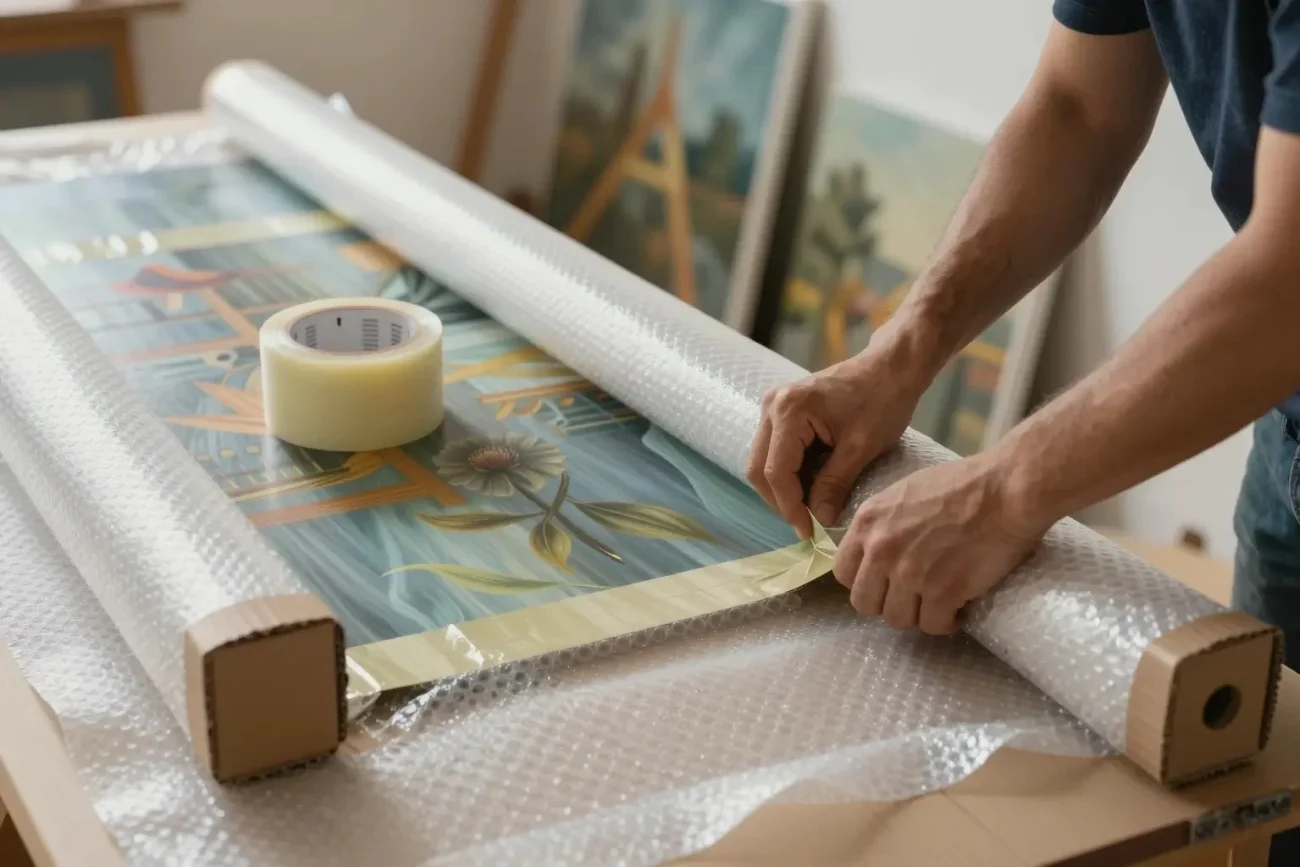
Moving art can be a daunting task, especially when it involves packing valuable and fragile items like paintings. To ensure artwork preservation during the moving process, it’s crucial to use the right packing techniques and materials. In this guide, we’ll cover how to securely wrap paintings for relocation, focusing on protective materials and handling techniques that prevent transit damage.
Essential Packing Supplies for Moving Art
Before you start the packing process, gather the necessary packing supplies to provide adequate cushioning and protection for your paintings.
- Bubble Wrap: Provides cushioning and protection against impact.
- Cardboard Corners: Protects the corners of the frame from damage.
- Packaging Tape: Secures wrapping materials in place.
- Protective Materials: Such as glassine paper or acid-free tissue paper for surface protection.
- Moving Boxes: Appropriately sized boxes to fit the artwork snugly.
Steps for Wrapping Paintings
Follow these steps for secure wrapping of paintings to ensure their safety during transportation:
Clean Hands and Work Area
Start by washing your hands to avoid transferring oils or dirt onto the artwork. Prepare a clean, flat surface where you can lay out your materials and paintings.
Protect the Painting Surface
Cover the front of the painting with glassine paper or acid-free tissue paper. This layer acts as a barrier against dust, fingerprints, and moisture.
Apply Cardboard Corners
Attach cardboard corners to each corner of the frame. These protect the most vulnerable parts of the painting from knocks and bumps during the move.
Wrap with Bubble Wrap
Wrap the entire painting with bubble wrap, ensuring that the bubbles face outwards to provide maximum cushioning. Secure the bubble wrap with packaging tape, but avoid taping directly onto the artwork.
Secure Wrapping
Use additional layers of bubble wrap if needed, especially for larger or more delicate paintings. Ensure that all sides are evenly wrapped to provide consistent protection.
Choose the Right Moving Box
Select a moving box slightly larger than your wrapped painting. Fill any empty spaces with packing peanuts or crumpled paper to prevent movement inside the box.
Seal the Box
Close the box and seal it securely with packaging tape. Label the box with “Fragile” and “This Side Up” to guide movers in handling the package with care.
Handling Paintings During the Move
Proper handling of paintings is crucial to prevent damage during transit. Here are some tips to ensure frame safety and canvas protection:
- Keep Upright: Always keep paintings upright to prevent pressure on the canvas.
- Avoid Stacking: Do not stack paintings on top of each other to avoid pressure and potential damage.
- Temperature Control: Avoid exposing paintings to extreme temperatures or direct sunlight during the move.
Additional Tips for Artwork Preservation
Consider these additional tips for long-term preservation of your artwork:
- Insurance: Consider insuring your artwork, especially if it is valuable.
- Professional Help: For high-value or large pieces, consider hiring professional art handlers.
- Documentation: Photograph your artwork before packing to document its condition.
Proper packing and handling of paintings are essential to prevent transit damage and preserve the integrity of your artwork. By using the right materials and techniques, you can ensure that your paintings arrive at their new location in the same condition as they were before the move. Remember, careful preparation and attention to detail are key components of a successful art relocation.
